Positioning Lighting Towers for Maximum Coverage
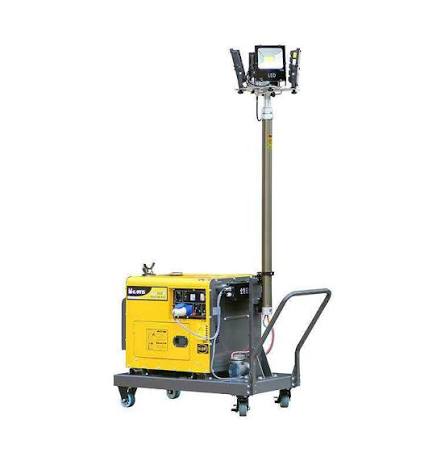
Mobile lighting towers are essential wherever work or activity continues after dark. Construction sites, roadworks, mines, car parks, outdoor events, sports fields and emergency response operations all depend on them to keep people safe and productive at night.
Yet many sites struggle with poor lighting even when they have plenty of towers. Some areas are dazzlingly bright while others sit in deep shadow. Workers squint into glare, drivers are blinded and neighbours complain about light spilling into their homes. In most cases, the problem is not the equipment. It is where and how the towers have been placed.
Good positioning can dramatically improve coverage, reduce the number of towers needed and lower fuel costs. This guide explains the key principles of lighting tower placement and offers practical layouts for common types of sites.
Start With the Task, Not the Tower
Before placing a single tower, define what needs to be lit and how brightly. Light levels are measured in lux, which describes how much light falls on a surface. Different activities need different levels.
As a general guide, pedestrian walkways and general site movement may need around 20 to 50 lux, general construction and loading areas often need 50 to 100 lux, and detailed work such as fitting, inspection or precision tasks can require 200 lux or more. Local regulations and industry standards may specify minimum levels, so check the requirements that apply to your site.
Once you know the target levels, divide the site into zones. A construction site, for example, may have a high-activity work face, a vehicle route, a storage area, welfare facilities and a perimeter. Each zone has different needs, and treating the whole site as one area almost always leads to wasted light in some places and shortages in others.
Use the Full Mast Height
Most mobile lighting towers have telescopic masts that extend to between seven and nine metres. Raising the mast to its full height is one of the simplest ways to improve coverage.
Higher light sources spread illumination over a wider area, produce more even light and cast shorter, softer shadows. They also reduce glare, because the light comes from above the normal line of sight rather than directly into people's eyes. Only lower the mast when necessary, for example beneath overhead power lines, in high winds or where height restrictions apply.
Aim the Lights Downward
Lamp heads should point down toward the work area, not outward toward the horizon. A common mistake is to tilt lamps upward to "throw" light further. This rarely improves useful coverage. Instead, it wastes light into the sky, creates glare for workers and drivers, and causes light pollution for nearby residents.
As a rule, the main beam should fall within the working area, and the lamps should be angled so that the brightest part of the light lands where the most important activity takes place.
Light From Behind the Work, Not in Front of the Workers
Position towers so that light shines onto the task from behind or beside the people working, rather than directly into their faces. Workers facing a lighting tower may be dazzled and unable to see detail or hazards. Similarly, place towers so that light does not shine directly toward approaching vehicles, whether on site haul roads or public roads.
Plan for Overlap and Even Coverage
A single tower produces a pool of light that is brightest near its base and fades toward the edges. If towers are spaced too far apart, dark patches appear between them. If they are too close together, light is wasted and fuel costs rise.
The goal is overlapping coverage, where the edge of one tower's light meets or slightly overlaps the next. This creates uniform illumination without harsh contrasts, which is important because eyes struggle to adjust when moving between very bright and very dark areas. Uniform light is safer, even if the average light level is slightly lower.
Many lighting suppliers can provide coverage diagrams or lighting calculations for their towers, showing how far useful light reaches at different mast heights. Using these figures to plan spacing is far more reliable than guesswork.
Reduce Shadows
Large objects such as excavators, stacked materials, scaffolding and temporary buildings cast deep shadows when lit from a single direction. Where possible, illuminate important work areas from two or more directions. Positioning towers on opposite sides or at different angles fills in shadows and gives workers a clearer view of their surroundings.
Choose Stable, Safe Ground
Lighting towers must be placed on firm, level ground. Soft soil, slopes and uneven surfaces can cause a tall mast to lean or topple, especially in wind. Always deploy stabiliser legs or outriggers as specified by the manufacturer, and check that the ground can support them.
Keep towers clear of excavations, embankment edges, overhead power lines and moving vehicles. Maintain a safe clearance from overhead lines in line with local regulations, allowing for the full height of the extended mast.
Consider Wind
Tall masts are affected by wind. Each lighting tower has a maximum wind speed rating for operation with the mast raised. Monitor forecasts and lower masts when winds approach the limit. In exposed locations such as coastal or desert sites, it may be wise to position towers in more sheltered spots where they can still provide adequate coverage.
Plan for Access and Refuelling
Diesel and hybrid lighting towers need refuelling and maintenance. Position them where service vehicles can reach them safely without interrupting work or entering hazardous areas. For long-running projects, consider units with extended fuel tanks, or solar and battery hybrid towers that require less frequent attention.
Practical Layouts for Common Sites
Construction sites. Place towers around the perimeter of the main work area, facing inward, so light falls onto the work face from several directions. Add towers along haul roads and at entrances, positioned to the side of the route and aimed along it rather than toward oncoming vehicles. Light storage areas and welfare facilities to a lower level.
Roadworks. Position towers on the same side as the works, angled along the direction of traffic and downward onto the work zone. Keep lights from shining toward approaching drivers, and coordinate positions with traffic management plans.
Car parks and open areas. Use a grid layout, with towers spaced so their coverage overlaps evenly. Place them away from pedestrian walkways where possible, but make sure paths and entrances are well lit.
Outdoor events. Light entrances, exits, walkways, toilets and emergency routes first, since these are safety priorities. Position towers behind or to the side of audience areas so they do not shine into guests' eyes or interfere with stage lighting. Where appearance matters, choose quieter LED or solar units and place them discreetly.
Emergency and security operations. Prioritise the incident area, access routes and perimeter. Towers placed at corners of a secure area can light fence lines and reduce hiding places.
Common Positioning Mistakes
- Placing towers based on convenience rather than a lighting plan.
- Leaving masts partially lowered when full height is available.
- Tilting lamps upward to reach further, causing glare and wasted light.
- Pointing lights toward workers, drivers or neighbouring properties.
- Spacing towers too far apart, leaving dark gaps between pools of light.
- Lighting everything to the same level instead of zoning by task.
- Forgetting to check wind limits, ground conditions and overhead hazards.
Final Thoughts
Effective site lighting depends as much on positioning as on the number or power of lighting towers. By starting with the task, raising masts to full height, aiming lamps downward, lighting from behind the work and planning overlapping coverage, you can achieve brighter, safer and more even illumination with fewer units.
This approach also cuts fuel consumption, reduces glare and light pollution, and improves relations with neighbours. When planning a new site, it is worth asking your tower light rental provider for coverage data or a lighting layout, and reviewing positions regularly as the site changes. A well-lit site is safer, more productive and easier to manage long after the sun goes down.

About Premium Author
This post has been authored and published by one of our premium contributors, who are experts in their fields. They bring high-quality, well-researched content that adds significant value to our platform.
Popular Categories
Stay Connected
Recent Posts